Thursday, March 04, 2010

an individual struggle

'Be kind, for everyone you meet is fighting a hard battle' [Plato, apparently]

We all suffer from lethargy from time to time, or they may be mood swings, depression. We’re all, I imagine, bipolar to a more or less pathological degree. And we’re driven, not just to keep going, but to improve, to progress, to get smarter and wiser, to experience and learn more. And then we fall into a bit of a funk and feel ashamed, disappointed, overwhelmed by our ignorance, our uselessness, our vanity, our vaunting ambition.

It’s a particular problem, perhaps, of individualism, the myth of the auto-didact, the Nietzschean Ubermensch. I’ve said we, but I have no right to generalize from myself. I wish I was a team player. I wish I had a family of my own. A daughter in which I could recognize something of myself. Myself but more confident, more sociable. More of a team player.

In recent times I’ve been trying to get my head around science, in my dilettantish way. Science, I suppose that reveals the amateurishness of my quest. Not astronomy, not genetics, not oceanography or neurophysiology. Just science. This might seem to suggest ambition, and maybe in my youngers days that might’ve been so, but I’m no longer young, though not old.

It seems to be a search for somewhere to belong. Even a mental place in which to belong. A way of thinking that is mine, and also shared, appreciated, understood, warmly welcomed. Science, or philosophy, something analytical, speculative. A place in which to get lost, safely, delightfully.

Here I am, an unprepossessing member of the species Homo sapiens – I’ve also heard it designated Homo sapiens sapiens, I don’t know why – one of over six billion currently inhabiting the biosphere of this small planet. My essential purpose is to reproduce, like every other member of the species, and like every member of the species Semibalanus balanoides [one of some 1220 species of barnacles], the species Aedes aegypti [one of some 3500 species of mosquito] and the species Nocardia opaca [one of a number of bacterial species, the number being so great, and so much in flux, as to be meaningless]. I haven’t managed to fulfil this purpose, but I’m reliably assured that, given the nature of our highly social existence, there are other ways to contribute to the success of our species. Knowledge, artistic excellence, possibly even a smile displayed at the right time and place. So I need not despair.

I have my heroes, as we all do. Let’s take some big splash-makers – Darwin, Shakespeare, Einstein. All rather remote, I admit. From my life, I mean. My next door neighbour might have led a heroic and admirable life, after all, but those great, instantly recognisable splash-makers at least provide fine examples of success beyond mere reproduction. I know Darwin produced ten kids but they weren’t his most successful productions. It makes me wonder about the meaning of the word offspring. That’s what civilization does to you, it complicates simple meanings with all these metaphorical overlays, confusing the purpose of life.

Labels:

Friday, January 02, 2009

exercising body and mind, largely in vain

willi hennig


I've managed to do 15 kms on the exercise bike for three days in a row now, and my daily steps aren't bad, but my weight keeps increasing. Probably better to measure it weekly rather than daily. Starting to obsess over this, but I really look terrible. Some recent photos have shocked me to the core.

Monroe doctrine. Propounded in 1823 by the USA's 5th President, it was designed to impede any further encroachments on New World territory by European colonial powers - especially Spain. It was audacious for the time, as the USA was hardly then in a position to back up its hand off policy. Niall Ferguson mentions it in the context of Japan's Chinese adventurism of the thirties, in which there might've been a whiff of their proclaiming some sort of Asian Monroe doctrine against Western powers - but with much less likelihood of success. 

2009 is a big year science-wise. It's a big Darwin year of course [I think I've already mentioned that here] and I hope to continue to educate myself [and my many readers] on evolutionary matters throughout the year. Also, 2009 is the year of astronomy. Four hundred years ago, in 1609, Galileo reflected that a new invention, the telescope, could be refined and developed and pointed at the night sky. In so doing he explored for the first time the surface of the moon, observed that the so-called milky way was made of stars, and discovered those moons of Jupiter now called the Galilean moons. Modern astronomy was born.

So to today's topic in evolution: cladistics.
This is a massively complex topic in fact, so I'll just deal with it skimmingly. Cladistics is a taxonomic system based on evolutionary relationships between species. In recent years it has become the predominant taxonomic system. The term clade was first used by Julian Huxley in 1958, but the real 'architect' of the system was Willi Hennig, who began developing the system, which he called phylogenetic systematics, while a POW of the British at the end of WW2. 

The recent success of cladistics owes much to developments in biochemical analysis. The term clade is ancient Greek for branch, and cladograms are trees of connection between species and their common ancestor. The major difference between cladistics and the Linnaean [or neo-Linnaean] taxonomic approaches are that cladistics is strictly about phylogeny, rather than simply observed similarities between species. Cladistic branching can be enormously complex, so much so that the old classifications [family, order, phylum, etc], which suggest that a few fixed levels can be sufficient, has been rendered obsolete. Cladistics presents a more open classification, which can be filled out as more knowledge comes to light. This knowledge can be gleaned from the fossil record, but DNA/RNA sequencing has increased our knowledge of the relations between existing species considerably. 
A clade is also known as a monophyletic group. Other more inclusive groups are discouraged in cladistic classifications.
Finally, taxonomy is something of a ding-dong battleground, a bit like some branches of linguistics, so there are plenty of critics of cladistics out there. Also, there's a question about whether it will ever fully replace the Linnaean system on the popular, lay level.


Labels: , ,

Tuesday, December 30, 2008

various weighty matters

zebras and their hooves

I hadn't visited the bonobo handshake blog for a while, and was happy to find it still going strong, and moved as always by those fascinating beasties. I'd heard that the fierce fighting in the Congo was wreaking havoc, as if bonobos didn't have enough to contend with, but at least the principal bonobo habitat, in the central region, is away from most of the fighting. Still there are scads of hungry desperate soldiers hunting throughout the whole country. 

Wish I had the money for a t-shirt or two.

Pronunciamento: when the army, in those countries where the army stands pretty big in its boots, illegally proclaims a lack of confidence in the prevailing government, setting the stage for a military coup. In expansionist Japan in the thirties there was a pronunciamento mood against the more cautious governments of the day, but more in the junior ranks of the army than among the top brass. 

Yesterday we visited the airport in an attempt to farewell my favourite six year old, who was taking her broken arm with her back to Mount Gambier. I was armed with a video camera, and carried too a little talking zebra she got from MacDonalds [not the farm] and left at my house, after painting its white hooves black [because that was the colour they should be, according to Her Certitude]. I have a funny relationship with airports. Because I've never flown in my adult life, never having the money for a ticket, they're like places where the other half live, though the other half looks more and more like myself. 
We kept telling ourselves we had plenty of time, which meant that we were running terribly late. We stopped at a post office for some reason, and then when we got there, we got into a confusion as always, finding ourselves precious minutes away from where we wanted to be. Then tried to find the Rex airlines departure area. We found the arrival area, and nobody to direct us, so we walked thousands more steps  until we found the departure area, which seemed to be immediately above the arrival area. By this time we were realizing it was going to be too late, and she was very apologetic, and I was cursing the awfulness of airports that I didn't belong to.
I love that girl so much. I'll ring her today.

From tomorrow plastic bags will be banned in South Australia. I'm not sure if the general public is ready for it, I have plenty of carry bags here but I keep forgetting to keep them in my car. I'll put them in right now

My weight, precisely measured at the right time of day, is 81.1 kgs. Today I'm restarting with CSIRO, volume 2. I did 5 kms on the exercise bike before 7.30, followed by a brief walk. If only I could keep it up, but do I ever? The boy is away for a few days over new year, and that's much relief. 


Labels: ,

Sunday, December 21, 2008

what's the point

a lily, unfestered

It's midnight and today's a new day, early, and I'm contemplating again my embonpoint. I weighed myself earlier, not at the right time, which as we all know is morning, naked or close to, post ablutions and pre breakfasting, and it was about 81.2, about ten kilos, or maybe even twelve, more than I'd like to be, but I realize I can't do it alone, because I haven't, and right now I'm writing this instead of going on a rolling midnight ramble or hopping on the exercise bike; maybe later. Yet I'm reaching a stage of really wanting to get myself under management which at least is a good sign. A certain feebleness of spirit led me to spend money on dinner out, with S and the boy, always with the very good excuse that within two or three weeks he'll be out of my care, so it's time to celebrate and be generous. Before this dinner [I ate chicken breast stuffed with camembert and other goodies, with chips and salad, great for the weight] I spent more time on my arse watching an eighties Clint Eastwood movie, The Pink Cadillac, all as part of the boy's quest to see every bit of Jim Carry footage ever captured on what passes for celluloid these days. And guess what, after dinner, at a nearby pub, we all retired to the home of S for yet another arse-flattening film, the considerably more uplifting Big Fish, a Tim Burton epic about fantasy and family and tensions between. I always feel awkward though with films about family, having let my own down so badly, having estranged myself so completely from them. 

Not going to do a film review here though. Felt a stab of romantic devotion to just one, so easy when she comes so perfectly packaged as the young Snow-White Sandra [Alison Lohman], as if this image of youth and beauty represented love and not simply a perfect specimen within which to spurt seed and start out on a new eugenics, a specimen doomed to withering but perfect at spurting time. But I must return to my embonpoint, the point after all. I'm struggling with my pedo steps, preferring fantasy myself to the hard stepping cycling work of reality. Did get a rare dose of reality the other night though in the form of a truly beautiful young woman, friendly as all get out to all and sundry, and lusted after no doubt by all and sundry in the bar where she works, a bar I visit regularly only because of her, because she is so soothing on the eye and a fillip for fantasy, and last night she tried to engage me in friendly chit-chat as she has before, and I've always been awkward and monosyllabic, trying so hard to seem self-contained and un-needy, but this time when she asked how I'd been I tossed off a remark about the difficulties of foster-caring, and she enthusiastically revealed that she had been in foster care as a teen and had been very difficult herself. Followed a brief enthusiastic exchange about the tough teen years, the selfishness and stubbornness, and it was of course a breakthrough of sorts, though i was unable to make anything more of it, yet what a subject to have in common, quite exciting really. Ah to be simply in the company of beautiful women always, watching them and pleasing them with conversation or whatever else I might have to offer, which admittedly isn't much in this competitive world.

But again getting back to my embonpoint...

Labels: ,

Saturday, December 13, 2008

warily approaching doctor trim


As part of my penance lately I'm forced to watch every Jim Carry movie ever made, as fellow-traveller along my foster-boy's journey. Recently unearthed were two early ventures, a weird, tinny Club Med promo about skiing and country music and chasing girls, and a mildly amusing vampire spoof. Last night, a "dirty Harry'' movie in which Carry has a brief frenetic role as a junky - the boy refused to go on watching after the character's early demise, though I was almost getting into it. Instead he put on Earth Girls are Easy, a mildly amusing spoof largely saved by the bodacious Geena Davis. Carry's usual character is under-utilized in this, another plus.   

My weight remains over 80k. Everything I eat seems to bloat me, though my appetite hasn't exactly faded. I might be eating for compensation, and I'm not keeping to disciplines I try to set myself, eg no eating after 7pm, or 8pm. I need support in this. The problem is probably associated with a general letting go, a lack of concern for my appearance and so forth. My walking isn't going too badly, it's increasing, but having no real effect on my weight. I've taken to a bit of exercise biking, but not regularly enough. I need a plan and outside discipline and enforcement. The walker tracker site's great, but I've not communicated with anyone through it. 

This interview with Gutbusters founder Gary Egger is instructive. He points out something that's very true in my case, that men don't worry too much about what can't be seen - the heart or liver for example, unless they're obviously playing up. So the gut's the thing to focus on. He also notes that one of the first things that happen when men fatten up is sleep apnoia - snoring. Again, my case is typical, though nobody has slept with me in a long time, so it's easy to ignore the problem. 

Egger also notes that it's an environmental problem in the west, caused by abundance and a general ease of life - personal cars for transportation and the like. It's true again in my case. My neighbours here in this group of four co-op homes ride bikes more than I do. One walks his dog regularly. I drive everywhere - remembering that I didn't get my licence until my mid-thirties. 

Egger has moved onto a new improved version of his gutbusters program, which appears to emphasise the science a bit more, and maybe focuses less exclusively on the waist. Professor Trim's weight loss program is specifically designed just for me. The web site is here, and I've just subscribed, or almost, to the newsletter. Actually it looks like I can't do it just now because my accounts aren't working. Anyway, the prices of everything are quite reasonable. There's a quick start program booklet for $9.95, and though the full program is a pricey $495, it can be paid in instalments. Still, I think I'll try the booklet first. My finances are a mess. 

Labels:

Tuesday, November 04, 2008

keeping occupied


As everyone worries about the economistupid, except all the poor people I know, and I don't know any rich ones, and as others anticipate an extraordinary moment in US political history, as do I very much, I struggle with life and death issues in my own sad meagre life but am buoyed and cheered as always by investigations outside myself. Homo floresiensis returned to my consciousness via an intriguing SBS doco. When last it left it the sceptics seemed to be gaining the upper hand, describing insisting the hobbit was a case of pathology, or hobbits were a case of pathology, microcephaly probably. I an amateur though well they might or must be right, floresiensis upsets too many applecarts, you can't have such a small and small-brained humanoid dating to only 13000 years ago without pathology, there's no possible fit otherwise, but now I hear apparently well-credentialled and richly experienced specialists, on teeth and bones and brains, arguing no way, this isn't pathology, this is genuine hominid enigma, and one of them makes connections between australopithecine bones, dating near two million years ago and never known to have come out of Africa, and the islandic floresiensis just north of Australia. 
Islands, they say, always throw up anomalies, and this is a whopper, it can hardly be underestimated, with a brain around 400 cubic centimetres, less than half that of homo erectus, the human ancestor thought to have brought us out of Africa. How can this much more recent, much smaller-brained species or subspecies, with wrist bones like those of chimpanzees, have survived almost to the present day [it seems to have been a tool-maker on the level of homo erectus]? The generally or previously acknowledged thinking about human evolution has been that of progressively increasing brain size, though the neanderthals who survived to 30000 years ago were an uncomfortable anomaly, but now all is up for grabs and people are wondering about Orang Pendek and there have been discoveries written up from Dmanisi, Georgia about a smaller-brained version of homo erectus in Asia, dating back 1.8 million years, and experts point out that there is so tiny fragmented a fossil record regarding human ancestry, hardly enough to build any coherent theory, and cherished theories can be smashed by so little a floresiensis, it's no wonder scientists are so passionately pro and con. 
So that was engrossing and I wished for a while I Coodabeen a paleontologist and maybe I Coodabeen if I hadn't been such a wastrel or dreamer, a paleontologist chatting with same, exciting each other and arguing with each other, stimulating each other to take home our ideas together and apart and think on them and work on them and examine and write further, modifying theories, creating revolutions.
Meanwhile I sit sometimes with no light and sound wondering what to do, getting fat and old as the external exciting world recedes, and I think, then I think no, avoid that, and soon the US election results will be out and that'll be fun, I'll be able to talk to someone about that maybe.   

Labels: ,

Sunday, October 12, 2008

Dear enemy

completely irrelevant pic, perhaps

This is the first of a series of ongoing pieces – for such issues never end – with an obviously related theme. Hopefully I won’t dwell on them too much, and will intersperse them with far more interesting material.


I obviously look upon the ruins of my connection with you, and its impact on many other parts of my life, in a very conflicted way. Bewilderment, bemusement, anger, and above all pain, these are the predominant descriptors. Should I add guilt? That wouldn’t be honest, for I don’t feel any great guilt over anything that I’ve said, done or written to you. Obviously I need to be re-educated, because I honestly don’t get it.


Let me start with a quick, blunt appraisal of you, to my mind. You have energized me and drained me of energy, in turns. I’ve rarely met a more sensual and sexual person, and that is highly energizing. To describe a person as sexy, is to say something both complex and highly subjective. Dull people, for example, aren’t sexy no matter how symmetrical their features or how svelte their figures. To describe someone as sexy is to say how you in particular respond to and are invigorated by their smile, their movements, their voice, their turn of phrase, their hunger and so on. It’s almost always a response to something quite unconscious in the other, and I won’t take it any further than that.


The trouble is, whether I dwell on the positives or the negatives, I’m bound to get your back up! So I’ll just try to proceed in all honesty.


Counterbalancing this energizing – indeed endlessly energizing – quality is something about you that leaves me flat. It’s a kind of strident, and I think fake-confident opinionatedness about everything. Now, of course, I feel myself the victim of that opinionated closure, and I suppose that was inevitable.


Opinions are conclusions. They come at the end. They close discussion. If someone says ‘I hate that writer’ or ‘that building’s a piece of shit’, or ‘that guy’s an arsehole’, there doesn’t seem much more to say. The implication seems to be that the person has thought all there is to think about the subject, has come to a considered and definite conclusion, and is now merely delivering it for the edification of others. To respond with, ‘well, I’m not sure I agree with you’, just seems a deliberate act of provocation. It’s draining to even think about coming out with such a response – you can already sense the defensiveness, the brick wall that you’re about to hit. Perhaps a better response is to ask why? – and maybe get a dialogue started that way.


This is an important point. In all the years I’ve known you, I can’t recall having too many stimulating conversations with you, and this is, I think, because you’re one of the most judgmental persons I’ve met. It’s true that this judgmentalism is like a red rag to a bull for me, and that I’m tempted to goad you when confronted with it, but in the past I’ve restrained myself far more often than giving into this impulse.  


This would be almost acceptable if you were a deeply informed person, steeped in the culture of whatever you happen to be dismissing, but clearly you’re not, and you’ve admitted this yourself often enough. Some years ago you were talking with pride about having read only about ‘three books in the last ten years’, and you’ve rarely evinced any interest in science, or history, or anything particularly cultural apart from rock music, comedy shows and home decorating. One would think this would engender some humility in your view of things, but it seems to me you prefer to try to humble the world to your simplifying views than to seem to appear weak by expressing uncertainty and wonder and amazement at the inordinate complexity around you.


Having said this, I’m absolutely delighted that you’ve started work this year as a political/cultural journalist with Radio Adelaide. I’ve always had a high regard for your intelligence, and I hope this job will continue to motivate you to move out of your comfort zone, leave your numerology and horoscopes behind, and explore cultural areas left barely touched in the past. I’m very envious. One day, if you ever rescind your decision to hate me, I might amuse you with my own feeble efforts, more than twenty years ago, to join the staff of Radio Adelaide – 5UV as it was then – as a volunteer.


I’ll wind up this first piece on the subject – there is so much more to say – by summarising the above a little. Over the years, I’ve enjoyed being a witness to your life – which has changed greatly in that time. From time to time, I’ve allowed myself a little commentary, and this has obviously incensed you to an extraordinary degree. Why this is so is essentially a psychological question. I’ve never wanted to spend lots of time with you, I’ve never angled for that. Your rigidity of thought, and your boredom with any ideas that can’t be grasped in less than five minutes, makes you more interesting to observe from a certain distance, and with a certain wry humour. You don’t really deserve to be taken too seriously. Which raises the question of why your treatment of me has hurt me so much. And it really really has. I might explore that next time.  


Labels:

Monday, September 01, 2008

slopes


About seven weeks ago I sprained my ankle very badly. This happened a few days after I crashed my car on the way to Victor Harbour [it was the other guy’s fault], so it was a bit of a bad run.

I was walking across the parklands on my way to court, and I was running late. The court case was about my having driven my now totally wrecked car without registration and without ownership being properly transferred. It was a fairly recently purchased vehicle, and I really was quite vague about the paperwork.

I’d just crossed a railway line and was walking along beside a low wire fence looking for a break so that I could get through it without having to climb over, but there was no break in sight. The place was littered with railway bits and pieces, and I came across a small concrete platform abutting the fence. It had a gentle slope to the top, and I thought I might walk up it and jump down over the fence to the other side.

The top line of the wire was just above the floor of the platform so I had to jump up a little to make sure I cleared it. Because I was a little nervous of getting my foot caught in the wire, I jumped up quite high. I had no thought that this jump would cause me any damage, so I was completely taken by surprise by the excruciating pain when I landed on the graveled area on the other side of the fence. The pain and surprise sent me sprawling, my glasses flying off… I sat up and thought hopefully that the pain would subside in a few moments. A month later it was still painful to the touch, and I was still limping.

I made a valiant effort to get up and hobble on my way, but I soon realized that, though clearly nothing was broken, the damage was greater than first hoped. I had to abandon all ideas of getting to the court, and, to cut a long story short, managed to arrange a rescue.

For a week I could barely walk at all, and was very impatient to be healed, noting each daily improvement, trying to calculate how long it would be before things were entirely back to normal. I needed to get to shops, to replenish my supplies and so forth.

I could definitely feel daily improvements, but the foot would throb intensely at the end of each day, because every step I took on it during the day was more painful than the previous step. A night’s rest and I would imagine the foot had recovered – until I put my weight on it. I borrowed my foster-kid’s old crutches, which he kindly adjusted to my size [he towers over me]. It was his only act of kindness, mind you. To get him to help me out with cleaning and cooking during my period of greatest incapacity was impossible. Later, I borrowed Sarah’s walking-stick [a birthday gift from a waggish friend of her son], which was helpful in taking the pressure off my foot, though I refused to use it outside.

About two weeks after the accident [I was of course carless at this time] I made the effort to go shopping, which entailed a walk to the bus stop, and then back with the shopping. However, after a long and tiring struggle to the bus stop, I realized this wasn’t going to work. I was totally exhausted and in considerable discomfort, and the idea of walking back the same way, heavy laden, after traipsing about the shops, rather horrified me.

But it was probably this trip [I’d tried one or two testing ventures outside] that brought me the valuable insight about slopes. I’d already assumed it was a slope that caused my injury. I hadn’t really landed awkwardly, but clearly my left foot had touched the ground before my right, and bore the brunt of my weight when I landed, causing the ankle to squish. The ground had been uneven – possibly even a stone or rock had obtruded. I didn’t examine the ground afterward, but it obviously makes sense.

I’d gone to a local café a day or two before, and noticed that I wasn’t in so much pain walking back as I was walking there. I didn’t work out why until two days afterwards, when walking across a driveway. I felt the pain in my ankle increase, and it suddenly occurred to me that it was because of the slope. My left foot, the damaged one, was on the high side of the sloping driveway, and was bearing more of the weight, suddenly, than my right foot. When we walk, of course, we remain upright, perpendicular to the surface of the earth, regardless of local variations in slope. So when we’re walking on a slope [I mean across one not up or down one], the weight will be more on the foot on the upper side of the slope, and the ratio of that differential load will depend on the angle of the slope.

So when you have an injured ankle, take note of slopes. It’s a bit like bike-riding – anyone who rides a bike regularly will be aware that few roads are completely flat for any great portion of their length. Cyclists know all about slopes. For the injured walker, what you will soon realize is that most footpaths slope down towards the road. Best to walk on that side of the road where the high side favours your strong foot.

Another interesting point is that we walk unconsciously always as if we’re walking on the flat, decelerating quickly our forward-leading foot just before it hits the ground. It’s a bit like the sweet spot when we engage the clutch changing gears. When we’re on a slope, though, we don’t quite adjust that deceleration – that’s to say, we might still be in the process of deceleration when our foot hits the ground. We might even be in the early stage of deceleration, and so we jar our foot slightly. This is barely noticeable when your feet are in mint condition, but when you have a badly sprained ankle you really feel it.

So, God, You gave me a sprained ankle for a reason. How devious and inscrutable is Your wisdom?

Labels: ,

Monday, July 21, 2008

Libertinage & libertarianism, individualism & society, the Marquis & me - 2


My first experience of this kind was at sixteen or seventeen. I fell for the ex-girlfriend of a friend, and instinctively felt, being a timid type but not without pretentions to genius, that I would make my best impression via the written word. This was particularly brought home to me after my first visit to her home. I’d gotten her address from my friend, and dug up the enormous courage required to knock on her door. The usual scenario pertained, I walked up and down her short street, appraising her house, examining the windows, wondering which one belonged to her bedroom, if she was in there, or in the living room with her family, or having a bath…
She was surprised and a little disconcerted at my appearance on her doorstep – we knew each other socially of course, but not enough for her ever to expect a visit – and invited me into the kitchen where a group of her friends had gathered. I’d seen none of them before, and I didn’t say a word for the rest of the visit. I went away feeling a gross failure, and, after brooding awhile on my plight, decided to write her a letter as full of energy and bounce as my visit had been full of dead weight. Naturally I tried to disguise while obliquely emphasizing the romance at its heart, aiming to flatter her perspicacity rather than her beauty. In fact she was no great beauty but she had style and a spontaneous brightness I longed to possess and play with.
I was on tenterhooks afterwards, but I felt it would be rude not to follow this letter up quite quickly with a visit, in case explanations were needed, or awkward mysteries had been created. On this occasion she was alone – apart from her family of course – and, it being a balmy night, she sat out on the porch with me, in her dressing gown. I thought that this was a more successful visit, but I was probably wrong. I’d imagined perhaps that, after the letter, my presence would be sufficiently awe-inspiring, and felt little need to embellish it with conversation. I was obviously more comfortable with the silences than she was.
As always on looking back, these amatory excursions have an inevitability about their ending. I soon reflected that my presence was a disappointment, and resolved again to reveal my real self through another letter, and then another, until the return to sender stamp set me to rights and seared my heart.
The point is that, though my personal preoccupations were quite different from those of Kafka, there was a similarity in my motive for writing – to pour out the material of my pent-up musings to a real, particular person, to fashion them to please her, and hopefully, though it was ever a very small hope, to have them reflected back at me in a fruitfully unexpected fashion. To genuinely communicate.

I would’ve done better to have chosen women who liked writing. I was almost cured by this first failure, and it was more than twenty years before I tried again.

Labels:

Sunday, July 13, 2008

Libertinage & libertarianism, individualism & society, the Marquis & me.

at least they kept his letters

The following is the first part of a lengthy essay I'm writing on the above subject, though hopefully I'll find a better title for it before I'm finished.

I’m an obscure individual who once had a book published, a cross between a novel and a memoir, effectively capturing my inability to ever really work out what I’m about. A book that failed financially, though its publication afforded me brief heroic status in my small circle, now much smaller, more like a dot.

From adolescence I’ve always written or thought about writing – but mainly the latter. I spend hours of every day avoiding writing and feeling guilty about not writing more or better.

I was an isolated, timid, passive child, and I suppose I still am, but of course in my luxuriant inner life I’m not timid, I’m argumentative, witty and spirited. I talked to myself like Adam Smith in the Edinburgh streets, but not so much now, I’m a little more complacent, or defeated, bored with repetition. So now I’m writing to shake myself up.

I was given to hero worship and intense identification. My first literary hero was probably Bob Dylan. I tuned out and tuned in, listening on headphones to the dark uncatchable lyrics of Visions of Johanna and Sad-eyed lady of the lowlands from the Blonde on Blonde album of revelations. I was myself this unfathomable seer. I practiced my fathomlessness before the mirror. And then came Jethro Tull and David Bowie and Pink Floyd and Lou Reed, words to music to words to music.

My first hero of the book was Thomas Hardy. Wrenched and choked I was in living the desolation of the Mayor of Casterbridge, Tess Durbeyfield, Jude Fawley, Giles Winterbourne. What emotional depth I felt I had as the tears drenched my pillow.

As I left my teens and started dabbling in writing myself I encountered one Franz Kafka. In three or four days I devoured The Trial, The Castle and America, then discovered his diaries, that fantastical resource book. Here was inspiration, a fellow who’d made of his aloneness an armour of the imagination, all-confining and intriguing. I was dazzled but daunted, and preferred to argue to myself that to be that good would mean sacrificing too much. There were other enticements – the simpatico haze of alcohol, idle fancies, beautiful faces, the anticipation of fleshly pleasures.

I read Kafka and Beckett, and wrote like them from time to time, but they weren’t very sexual, it seemed to me, though no doubt there have been critics who have fruitfully examined their oeuvre through sexual or Freudian lenses.

When I was young I got wind of the Freudian idea of sublimation. The whole of civilization was a channeling of sexual energy into a more abstract, but often quite concrete, creativity. I didn’t look at this idea too closely – I didn’t read Freud himself – but it had obvious appeal. I used fantasies of girls – and boys too in my teen years - to energise myself. When I read a stimulating book, my fantasy one of the moment read it too, over my shoulder, and we were aroused together. I exerted myself on the soccer field when I pictured her on the sidelines. I spoke French with all the romantic resonances and her eyes widened with admiration then narrowed with desire, I spoke obscurely and oracularly and she had the half-disguised hopeful look of wanting the mysterious powers my words might reveal.

The sexual element in Kafka was revealed, surely, not so much in the content of his writing but the fact that so much of it was addressed to women – his voluminous letters to Felice Bauer, and later to Milena Jesenska. Clearly, having someone specific to write to, delighting in the circumspection of flirtation, energized him no end. It’s a phenomenon I particularly identify with. Apart from occasional billets doux, I’ve made an effort to embark on correspondence with three different females in my life, each time with disastrous results. Arguably I’m a victim of the modern age, in which women are far less likely to put up with unwanted attentions, however politely, diffidently or wittily couched. More to the point though, they were all the wrong people for this sort of thing.

Labels:

Tuesday, June 24, 2008

unexpected connections


I’m taking much pleasure from my little job teaching English to a group of Vietnamese people at their community centre. Most of them are older people, part of the old order, I suppose, that was overturned with the fall of Saigon in 1975. The oldest student is one of only two women out of eight or so regulars. She walks with a pronounced stoop which further reduces her diminutive stature. I noticed that she spoke English with a trace of French, and that she always perked up when I highlighted the French or Latin origin of certain English words. The other day, when I was going through the future tense with them, I had them answer various future tense questions from the exercise book. The elderly woman, Kim, was asked what she would be doing in two years’ time. I was vaguely uncomfortable with the question – hoping she wouldn’t say ‘I only hope I’m still alive’, which would be treated with awkward, good-mannered humour by the rest of us. Instead she said ‘In two years time I will be in Paris’, which encouraged me to venture into some [very basic] French dialogue with her. Her face lit up charmingly, and I wondered then, both at her own particular life and background, and at the rich opportunities and experiences, not to mention the various forms of humiliation and misery, that have come in the train of colonialism.

Labels: ,

Saturday, June 14, 2008

is anyone out there?

Technorati Profile

Labels:

Thursday, May 29, 2008

night divagations


The cats are really getting vicious with each other, because I don’t always have enough food for them and yesterday I ran out, and out of money too, till tomorrow, and I’ve noticed it's happened before with these languorous beasts, and I suppose it happens with people too, when they haven’t enough to content them, things get all dysfunctional which in most parts of Australia doesn’t happen, not really, not much, unless drugs and other stupors make people tetchy and broke and you can see their organs pumping frenetically under their translucent stretched skin, and their kids avoid them to build rich fantasies of tenuous comfort and monstrous invasion, screams and sleep.

Labels: ,

Tuesday, March 18, 2008

Kissinger and Vietnam


criminal handshake? - Kissinger and Hanoi's Le Duc Tho, January 1973


Tomorrow, supposedly, we’ll be coming out of the biggest heat wave for any Austalian capital city in recorded history [which goes back only 120 years]. Biggest by a long drink, too, today being the fifteenth day with a maximum over 35. Previously, Perth held the record with 10 consecutives 20 years ago. I’ve survived this period – well, haven’t quite survived it yet – sans AC, though I helped Sarah install one from Radio Rentals a few days ago, and have been taking advantage of it just a little, nervously, being semi persona non grata over there.

Not surprisingly it has been an unproductive period, I’m having big trouble with my novel/memoir, it being too unwieldy, too personal, too obviously uncommercial for a publisher, too potentially dangerous [though that’s too strong a word] to people I love. I’m not sure what to do about it.


What do you do when someone you love lets it be known that she despises you? You have to let it go, I think. The Morcheeba song plays in my head: Fear can stop you loving, love can stop your fear. But it’s not always that clear.

So let me focus, for the time being, on Kissinger and Vietnam. I’ve just read a tatty old book, first published in 1973 when Kissinger was still at the height of his power and the Vietnam War was still being prolonged by the Nixon administration, called Kissinger: the uses of power, by David Landau. I was prompted to read it because, well, it was around the house, and I wanted to get some background to claims by some that Kissinger is a war criminal.

Landau’s book is unsympathetic to Kissinger, though far from unreservedly so. I doubt if it would’ve occurred to him at that time to consider Kissinger a criminal, especially as he deals in his book with considerably more hawkish characters, including Nixon himself. Also, as I argued in my piece on Suharto, the idea of bringing heads of state, or top brass, to book for their decisions is a relatively new one. Landau, who confines himself in the book to Kissinger’s involvement in the Vietnam War, contents himself with the conclusion [devastating enough, after all] that Kissinger and Nixon did more to perpetuate that war than anyone else.

Kissinger was a great admirer of the nineteenth century Austrian diplomat, Metternich, and he shared Metternich’s anti-democratic elitism. This elitism seems to have blinded him to considerations about what the Vietnamese people really wanted. In fact he would have doubted if they knew what they wanted, realizing that, for all sorts of reasons, they were more easily captured, in terms of minds and hearts, by the NLF than by the Americans and their European precursors. He was doubtless right in this, but it’s only a short step from having a certain contempt for a people’s ability to choose what is best for them, according to Kissinger’s lights, and treating them as dispensable.

We are moving away, I hope, from the ‘grand schema’, chess-playing politics of the nineteenth century, and its partial revival in the seventies under Kissinger and his ilk. With the growth of education and trade, and the opening of borders, we’re making many more connections well below the heady levels of world diplomacy. Kissinger’s reputation has become something of a victim of this more humane refocusing, and deservedly so. Vietnam was never a threat to the USA, and Kissinger, as much as anyone, must’ve known that its people were much more interested in self-determination and freedom from foreign interference than in chimerical concepts such as communism. It seems that his ambition and love of centre stage led him to conveniently adopt the more rabid anti-communism of others in the Nixon administration [many of whom were suspicious of his ‘dovishness’], which allowed him to play the interfering game on the world’s stage to his heart’s content – at a massive human cost.

Landau’s book, though full of an insider’s insights, doesn’t touch on Chile, East Timor or other hotspots and disasters mentioned on such anti-Kissinger sites as this one. Neither does he claim Kissinger as the architect of the Cambodia bombing, as seems to be commonplace among Kissinger detractors now. It may be that further information has come to light, I don’t know. It’s an important matter, for if it’s true that around a million civilians of Cambodia and Laos were killed in those raids, as is claimed on the previously linked site, then that is a crime for which the decision-makers should be held responsible. Claims that the government of Cambodia permitted the bombing are hardly exculpatory.

Is Kissinger a criminal? I honestly don’t know. The real problem is that the evidence will never get to be tested in an international court, because the USA recognizes no international jurisdiction over its citizens.

It should be taken as a given that the foreign policies of all nations are monumentally self-serving. The word ‘monumentally’ provides essential emphasis. This is a fact for the most powerful and the least powerful nations on Earth. However, the most powerful countries inevitably wreak most havoc in the global arena. Given this fact, international policing and legal institutions are essential to safeguard small nations from the depradations of stronger ones. The USA has placed itself above the law in this regard – a situation which is as unacceptable as would have been a monarch proclaiming the divine right of kings in the enlightenment era. As unacceptable as a police force, with almost unlimited powers, answerable to no higher authority beyond itself.

This untenable situation needs first to be fixed, otherwise all the evidence in the world will amount to very little.


Labels: ,

Friday, February 29, 2008

still here


Lloyd Rees - a lovely program on his work on the ABC recently - intelligence, sensibility, self-discipline and self-belief


It looks as if I've stopped blogging, which I didn't entirely intend to do. I've been working on a novel, since suffering a traumatic experience at the new year. Much of the rest of the time has been spent hiding under the bedclothes and avoiding various responsibilities. I'm a little better now, but I'll post sparingly. In fact I'm only posting today because I've had a temporary blockage with the novel [which isn't really a novel, but I don't know what else to call it].

I'm hoping too that I can bring myself to visit other blogs. I need more personal contacts, especially new ones.

Labels:

Friday, December 14, 2007

wandering in the wilderness


the mighty, multifaceted Torrens


I'm onto the religion thing again, and it's not so much that I'm obsessed but that I'm almost wanting to find something to obsess over, or at least to find a subject to dedicate myself to, to anchor my flighty craft.

So, perversely, I'll avoid referring to it awhile. The other day I took Courtney out, down to the river, to give Sarah a break. Courtney was in love with the idea. Pic-a-nic basket, blanket, cut lunch, fruit and cordial. It was sharply hot. 'Remember when we went to the river and me and Isabelle climbed the rocks in the water and it was really dangerous, let's go there again...'
I remembered it, mainly as she'd often reminded me and I'd wondered at how such a seemingly paltry occasion - we'd stopped for only a few moments where the river was the shallowest, narrowest thing and Courtney [who's five] had been trying to match her twelve-year-old cousin's boldness, wobbling on a few lapped rocks and maybe getting her feet wet - could have so happily stuck in her mind as the consumate Wild Experience.

I would never be able to find that fortuitous spot again, but maybe I might find something equally memory-inducing. I drove into Bonython Park, just down from our house, and instantly found a perfect pic-a-nic spot, with soft greenery sloping down to the riverbank, and reeds and willows and magpies and bobbing moorhens.

We played for a while at simply imbibing the Great Outdoors whilst speedily polishing off the cheeses, fruits, sannies and juices - at Courtney's insistence, everything was eaten within five minutes of our arrival, apart from some bread for the ducks. We wandered down to the bank, Courtney hunting for fishing sticks. I saw a solitary duck heading our way, and Courtney threw a few morsels at it. In fact she’d ripped up and tossed in all the bread within seconds of its arrival. Within a few minutes there were more than a dozen of the creatures, but no bread for them. They clacked and squabbled and flapped each other off the premises, and I was reminded of something I’d read, or heard, recently, that the Rwandan genocide was more about a pecking-order battle over scarce resources than anything else. I didn’t know about that, but I did know that if I left my two cats without food for more than a day they’d be growling and hissing and trying to scratch each others’ eyes out…

There was a bridge nearby, and by it a kind of weir with rocks piled behind it and a pool. I felt that something more memorable was required than feeding or not feeding a few ducks, so I enticed Courtney over there, with some difficulty at first – she was more interested in trying to make a fishing rod out of a willow branch. Once there, though, she was captivated. In vain did I try to interest her in a beautiful ibis at the far end of the pool, fishing itself with statued intentness and brief bold plunges. Even the mother duck with its tiny babies in arrow formation on the weir’s edge only elicited an unconvincing ‘aw, cute’.

No, she was absorbed in something else as she stepped onto those more or less flat, safe rocks largely submerged in the shallow water, zig-zagging to the bank opposite. 'Look at me, I'm fast, I'm brave, bet you can't get across this fast [of course I pretended to struggle], I'm a good jumper, aren't I?' Backwards and forwards she went, finding different routes, trying more slippery and submerged rocks, but nothing so dangerous as to really perturb me. I recalled mark twain, the mark of two fathoms, marking the border between safe and dangerous water, the boundary we all like to ride, so much more exhilarating than feeding a few ducks.

She quickly exhausted the limited repertoire, though, and would've been contented in endless repetition, but I finally lured her up some steps on the further bank, to the great unknown where I was hoping to find a toilet block. 'Are you busting, or are you screaming? Screaming's when it's running down your leg and you can't stop it,' she explained. 'I'm busting too, but I'm not screaming.'

Over the embankment was a running track with exercise stops and a green toilet block, all chained up. Further along the track there were signs pointing to toilets, but I couldn't make sense of them. We went back down along the river, and I spotted another bridge further along. Before reaching it though we came across a wooded island which cast a giant shadow, chilling us a little. 'Look there', I said. In a pool of light, halfway to the island, a large fish, a dark but distinct shape, lazily wagged its tail just below the surface. ‘Let’s get closer’, she whispered, and stepped onto the muddy little beach easing into the water. ‘Whoah,’ she shouted as her feet sank into the ooze. ‘Look out, it’s quicksand, you’ll be nothing but bubbles in a few seconds. Hey, but look at this, just what you’re looking for.’ It was a fishing rod, yellow in colour, faded and muddied yet still with its reel and line. Courtney didn’t want it though – too yucky, she said, too strange and scarily abandoned, I thought. But she did want to do some exploring, coaxing me over to a marshy region closer to the island. ‘Your shoes are getting very muddy, and there are crocodiles, and we have to find a toilet soon, remember?’

So we moved on, crossing the bridge back to the other bank, where she decided that she was very tired suddenly and needed to hitch a ride on my shoulders. ‘See if you can see the car from up there.’ ‘Oh no, we’re so lost, we’ll never find it.’ I helped her to a spot of gingery tree-climbing along the way, and she at last sighted our vehicle. Only a few minutes’ drive home.

Labels: ,

Thursday, December 06, 2007

weighty fantasies


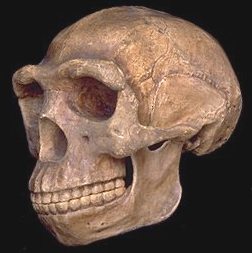
Beijing Man, I believe


The dreaded lurgie has struck me again - something absorbed from the environment has set off my compromised immune system and again I'm sniffling and coughing and going through two or three hankies a day and it won't go away until I visit the doc and get antibiotics to clear things before it turns to pleurisy or pneumonia. Apart from that I feel generally hale, but the constant sniffling and throat-clearing affects my stamina a bit, as well as my sociability.

Just wondering about the word lurgie. Its etymology seems pretty uncertain but the phrase the dreaded lurgie was popularised by an episode of the Goon Show. Well done lads.

I'm still not free of commitments, but I'm catching sight of the light, and I have a few challenges ahead, re making a living. I'm also trying to get fitter - I bought some quite snappy trousers today, not uncomfortably tight, just enough to draw attention to the wrong kind of bulge above the waistline. Could've gone for wider, but I needed to bring my target into better focus. I'd say I'm about 7 or 8 kilos above perfect trim. My diet's fine, it's mostly the exercise that's the problem [bad word - I've been told not to think of it as exercise, just activity]. Trouble is, guys always put their weight on around the tum, and find it well-nigh impossible to remove it from same.

Avoiding the internet a little lately too, getting my stimulation from more traditional sources. Everything stimulates, and an article in Cosmos about important and puzzling archaeological finds in Dmanisi, Georgia, as well as more reading about the ongoing Homo floresiensis controversy have made me want to summarise, for my own benefit, the current thinking, insofar as it can be summarised, on hominid ancestry. This has led to further fantasies, of giving talks on various mainly philosophical issues, before a select audience...

1. Human self-knowledge and self-deception: a scientific approach.
We've known for millenia that we can't be trusted to be judge in our own case, and experimental evidence suggests that even people who have known us for no more than five minutes are better predictors of our behaviour than we are. At the same time, immediate, internal access tells us that in some essential way we know our minds better than anyone else possibly can. How can these two findings be reconciled?

2. Human origins: the current state of knowledge
Does anyone remember Java Man? Peking Man? How about Cro-Magnon Man? Why were they all men? What place do those old guys have in the current picture of human and pre-human ancestry? What exactly is a hominid? How does Australopithecus relate to Homo erectus? Is John Howard really the last Neanderthal?

3. Morality: a triumph of reason over impulse, or a rationalisation of survival instincts?
David Hume notoriously wrote that reason is the slave of the emotions, but until recently this view has found few champions among philosophers. Professional prejudice? What role does reason really play in our sense of right and wrong? And what exactly is reason anyway? Important new work in cognitive anthropology and evolutionary psychology throws some fascinating light on these questions.

4. Philosophy and science: friends, enemies or strangers?
What's the difference between a philosophical question and a scientific question? Does the philosophy of science have any relevance to scientific practice? What exactly is a scientific theory, and what makes the term so controversial? Is it true that science can only answer how questions and not why questions? How so - or why so?

5.
Evolution and religion: what's at stake?
Various thinkers, religious and non-religious, have been at pains to argue that the theory of evolution and religious belief are entirely compatible. Others have been at pains to point out precisely the opposite. Certainly the vehemence of religious, and particularly Christian, attacks on evolution suggests a certain discontent amongst those lucky enough to be made in God's image. Surely the Primate can't really be a primate?

And so forth. Don't hold your breath.

Labels: , , ,

Tuesday, November 06, 2007

back in the USSR


Happy days - me and me mates at the inaugural meeting of the Urbane Society for Sceptical Romantics [that's me at the back somewhere]


I'm trying to find a way to get back to more regular writing - offloading other work, getting regular possession of my computer back from my foster-kid etc - but in the meantime I've decided to abandon the daily illustrated title, as it's so far from daily, and because I want to get back to the USSR, so to speak. So I'm returning to my original, and I think far superior blog title, the new USSR. Hopefully the message will gradually trickle through to the Happy Few.

Labels:

Friday, August 17, 2007

summa [see also winta] pathologica


Experts say - or one said on the radio the other day - that many people don't recognise or acknowledge their own symptoms re depression. they hear all the talk and they listen as to a TV medical drama. Interesting, even sometimes gripping, but a bit melodramatic.

A suspicious or sceptical person might think too that medical experts would talk up depression, medicalising a state that once was well within the ever-shifting introvert-extrovert spectrum of human responses defined as normal. Try to calculate how many millions of dollars drug companies have made out of this middle-class malady.

Child abuse and paedophilia too were not on the radar in earlier times. Not that they were treated as normal, rather they weren't conceptualised. Children just weren't the centre of attention, on a societal level, for good or ill.

Take my own case as I listened to the expert saying Do you avoid your friends, do you generally isolate yourself, are you often listless, do you feel overwhelmed, do you find making decisions an intolerable burden? Then it's likely you're suffering from clinical depression. This description, I thought, fitted me to a T [strange expression]. Then swift came the qualifications. I don't always avoid people, I'm sometimes quite decisive, energetic, even chatty. Do I weave in and out of depression? Doesn't this depression description fit all of the people some of the time? Like astrology? It wouldn't be too surprising if, when told that his true horoscopological nature was that of a sentimental homebody, a professor of mathematical logic, who's spent the last thirty years lecturing around the globe, responded with ''oh yes, that description fits me to a T".

There's also the question of how depressive states fit with our more permanent nature or temperament. If depression is a pathological state, is there such a thing as a pathological temperament? Doubtless yes, certainly from an evolutionary perspective. Such a temperament would significantly disable its owner in the mating and seed-spreading-and-nurturing games, almost as surely as a lifetime's imprisonment.

The temperament, though, is ineluctably recalcitrant, the selves are many. Some thrive over a lifetime, some flash up and die in an instant. This unfathomable unpredictability is our foremost hope. Our passions surprise us, as does our tediousness. We never know, so we keep going, to try to find out what we don't know next, maybe out of a futile quest for certainty, or out of curious habit.

Company, of course, is another thing. Are we seeking to escape or extend ourselves? Both, doubtless. In any case other people are marvelous, when seen from the proper distance.

There are many problems here, and perhaps even more solutions. A brisk suburban walk, an evening's intoxication, regularly repeated, a good book, a course in Indian cuisine, the pursuit of One Thing, a lobotomy, a love affair, suicide, a win in some lottery or other. And you just never know.


Labels: ,

Wednesday, July 11, 2007

let it go


theme for today


Over at EvolutionBlog, Jason Rosenhouse does a good job of defending the likes of Dawkins and Hitchens against so-called moderates who treat them as extremists harming their own cause. Comparisons between them and the highly admirable atheist philosopher J L Mackie are instructive. I haven't read Mackie's The Miracle of Theism but I've read his Ethics: inventing right and wrong a couple of times, and I'm sure his style would bore anyone not madly captivated by labyrinthine philosophical discourse. And getting to a wider audience is probably more than half the battle. Rosenhouse makes the point well here:
If Dawkins and all the rest stripped every snide remark out of their books, that would not stop the right wing noise machine from painting them as dangerous extremists. The mere fact that they are endorsing atheism and having some success is enough for that. On the other hand, such a move would surely hurt their sales and lead to less media attention as a result. Flashy rhetoric attracts attention.
Now I want to write about something completely different, almost. A while back I had a most unfortunate and public spat with someone over the use of language. Frustrated with not getting my voice heard as the heat of the debate rose, I ended up calling her a bigot, which put paid to any further discussion, civilized or uncivilized. Everybody was uncomfortable, and I had the distinct impression, whether correct or incorrect, that they all looked upon me as a cad and a bounder. So for my own sake I need to tease this issue out carefully.

The difference of view arose when one of my step-daughters, herself a mother of three, complained that the word 'bastard' was being used too frequently on TV during children's viewing time. Some obvious responses came to mind, though it was hard to get a coherent argument across with several people at the table all trying to put forward their views at the same time. I'll put the two most obvious responses here. First, the word bastard has come to have a distinctive colloquial meaning in Australia. The long entry for 'bastard' in Australia's Macquarie dictionary testifies to its manifold use here, and much play is made in Nino Culotta's There a weird mob to misunderstandings surrounding Australians' everyday use of a word which might cause offense elsewhere. Second, if we're talking about primary or high school kids, there's no doubt that they would hear [and probably use] much blunter and racier words and phrases than 'bastard' in the school-yard.

These are not the real issues for me, though. The issue is a broader one of morality. Let me illustrate with a couple of stories.

A while back, I was one of two people from our housing co-op assisting in an appeal or dispute between two members of a highly dysfunctional co-op, and that co-op's hierarchy. This co-op's recent history was appalling. It was made up of elderly women, a number of whom had left the co-op, even abandoning their houses, because the stress of meetings and of trying to deal with the cabal running the co-op was just too great. The list of people who had left or were too 'sick' to attend meetings was a long one, and the cabal stood accused of high-handedness, contempt for due process, intimidation, preferential treatment re maintenance and so forth. People were afraid to speak at meetings lest they be shouted down. The leader of the cabal, the most long-standing member of the co-op, presented herself very well at the appeal [unsurprisingly] and confessed to not knowing what the fuss was about. She found the meetings to be robust but nothing more, 'and of course, there's never any bad language, that would be totally unacceptable'. This remark really struck me. I was tempted to point out that, in our own co-op, everybody used 'bad language', quite frequently, but we all got on famously, most of the time.

Another story involves the actor, Carole Lombard, who died tragically young in a plane crash. Apparently Lombard could barely finish a sentence without swearing, she was considered one of the most foul-mouthed women in Hollywood, but she was also one of the most admired and loved, for her charity work, her generosity to aspiring actors, her down-to-earth good humour.

It's obvious enough where I'm going with this [and many other examples spring to mind as I write]; the point being that there's no clear connection between a person's use [or avoidance] of soi-disant bad language, and their moral value.

How anybody could think that a kid hearing the word ‘bastard’ on TV, and using it herself, would therefore be more corrupted or degenerate than if the word heard and used was ‘blackguard’ or ‘rapscallion’ is frankly beyond me. If she used it to belittle someone born out of wedlock, that of course would be another matter, but that’s not the current usage.

I was asked, in the course of this dispute, if I thought it would be ok if Courtney, my favourite four-year-old, started using the word bastard. In my stubbornness I insisted that it would be fine by me. A rather more considered response would have been that I would have discouraged it, for two reasons. First, if I didn’t discourage her, she might’ve gone on using it until she encountered and was admonished by someone much more intolerant – one of those Christians who think that bad language is a sin, while worshipping and promoting a mass-murdering supernatural despot is fine. Second, she would probably be using it as a put-down, or as a general act of name-calling, and that should generally be discouraged. I might add that I’ve heard Courtney use, in her innocence, terms much stronger, by socially accepted standards, than bastard. She didn’t pick them up from TV either, which illustrates my very first point.

There’s a bit of history behind this dispute, for me at least. I recall this same step-daughter having some doubts about the ‘strong’ language used in a novel I’d published some ten years ago. It was about growing up in a working-class suburb, and the colourful language of some of its characters was clearly integral to the novel. I didn’t know whether to be infuriated or amused at her pious, puritanical response, and obviously there’s still some residual annoyance. I put it down to the corrupting influence of that murderous Lord.

Finally, I’m not sure if this fits but something is nagging me to insert it. When I was a teenager, I watched a movie on TV, Night of the Iguana, based on a play by Tennessee Williams. In a seminal scene [ho ho], Deborah Kerr was talking to Richard Burton about some sad but sympathetic fellow who’d masturbated in front of her, or something like that. Burton’s character said something contemptuous about the fellow and his ‘disgusting act’, to which Kerr responded, ‘I didn’t find it disgusting. The only thing I really find disgusting is cruelty.’ It was one of those unforgettable, penny-dropping moments for me, one that has permanently affected my view of morality. So I look at bad language through that particular prism. Is its use a form of cruelty? If so, or when so, condemn it whole-heartedly. When it isn’t, let it go.

Labels: ,

pavlov's cat